
African Milk Tree / Cathedral Cactus
Euphorbia trigona
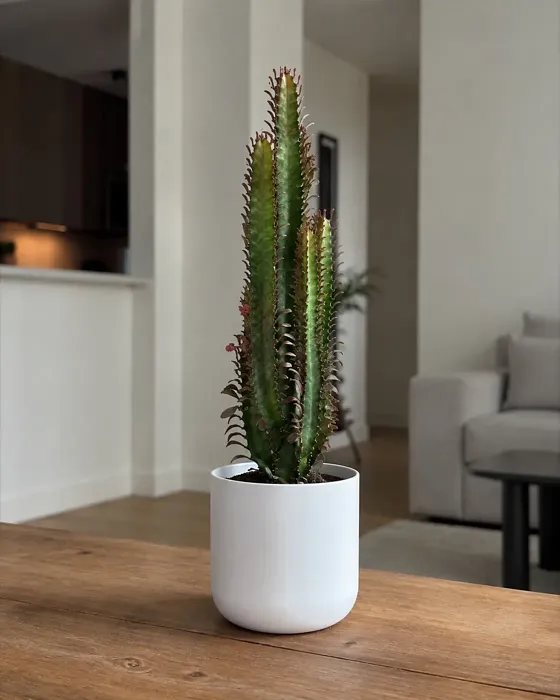
description

African Milk Tree is a tall branching succulent with triangular stems and irritating milky sap.
benefits
- Low—water tolerant
- Сan handle lower humidity level
- Drought-tolerant — forgives missed waterings
- Low maintenance
- Suitable for containers
warnings
- Toxic to cats
- Toxic to dogs
How to care for African Milk Tree
sunlight
In central Africa, African Milk Tree grows in bright, open conditions. Give it the sunniest spot you have indoors, with a little time to adjust before it meets strong direct rays.
Bright indirect light


Place it close to an east, west, or bright south-facing window. This is a good starting point for plants newly brought indoors or moved from lower light.
Direct sun
Several hours of gentle morning or late-afternoon sun suits an established plant. Introduce stronger sun gradually over 1-2 weeks, especially in summer, to prevent pale, scorched patches.
watering
Let the potting mix dry out completely before watering again. Then water thoroughly until it runs from the drainage hole, and empty the saucer.
Spring and summer


During active growth, this is often about every 2-4 weeks indoors. Check that the mix is dry all the way down and the pot feels light, rather than watering by the calendar.
Autumn and winter
In cooler, lower-light conditions, water roughly every 4-8 weeks, only after the root ball has dried fully. A warm, bright spot, small terracotta pot, or gritty mix will dry faster than a large plastic pot in shade.

humidity
Relative humidity
African Milk Tree handles typical indoor air well. Aim for average household humidity, roughly 30-50%, with good airflow. It does not need regular misting, and persistently humid, stagnant air can encourage rot.
Exceptionally dry, hot air may contribute to slight stem wrinkling or dry brown tips. Check the soil first: wrinkling is more often a sign that the plant needs water than a need for higher humidity.
temperature
Preferred range
Winter minimum
Native to warm, dry parts of Africa, African Milk Tree is happiest in steady indoor warmth. It handles hot summer rooms well with bright light and airflow, but cool, damp conditions can lead to stress and rot.
nutrition
March - August
Feed about once a month while it is actively growing, using a cactus and succulent fertilizer diluted to half strength. Stop feeding in autumn and winter, or whenever growth has slowed in cool, low-light conditions.
Nitrogen
Supports steady stem growth and healthy green color. A diluted, balanced cactus fertilizer provides enough without encouraging soft, weak growth.
Potassium
Supports sturdy growth and general resilience. It is supplied by most complete cactus fertilizers, so extra supplements are rarely needed.
soil
Gritty, fast-draining soil
Its succulent roots need air around them and should never sit wet. Use a cactus mix loosened with about one-third pumice, perlite, or coarse grit, in a pot with a drainage hole.
pH 6,0 - 7,0
This is slightly acidic to neutral, a range most ready-made cactus mixes provide. Avoid heavily limed or water-retentive garden soil, which can hold too much moisture around the roots.