
Blue Fescue / Blue Mountain Grass
Festuca glauca
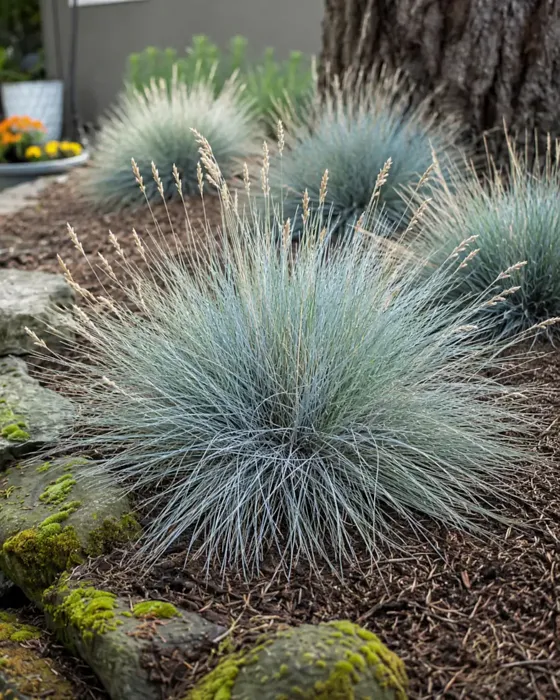
description

Blue Fescue (Festuca glauca), also called Blue Mountain Grass, forms tidy, hedgehog-like clumps of narrow blue-grey blades. Its cool-toned foliage keeps its colour through much of the growing season and makes a crisp contrast beside darker-leaved plants or stone. Native to parts of southern Europe, this compact grass is naturally adapted to dry, open places and dislikes sitting wet around its roots. In early summer, airy stems rise above the mound with pale, oat-like flower heads.
benefits
- Suitable for containers
How to care for Blue Fescue
sunlight
Blue fescue comes from open, sunny grasslands and rocky slopes. Give it the brightest spot you have so its compact clumps keep their blue-grey colour.
Full sun

Plant outdoors where it receives about 6 or more hours of direct sun daily. It can tolerate light afternoon shade, especially in very hot climates, but too much shade makes growth greener, looser, and less vigorous.
watering
Water deeply, then let the soil dry well before watering again. Blue fescue is drought tolerant once established and quickly declines in soggy soil.
Spring and summer


For a potted plant, water about every 7-14 days in warm, dry weather. Check first: water only when the mix is dry at least halfway down and the pot feels light. In the ground, water during prolonged dry spells, especially in its first growing season.
Autumn and winter
Growth slows in cool weather, so a container may need water only every 2-4 weeks if sheltered from rain. Do not water frozen soil. Rain, low light, a large pot, and a moisture-retentive mix all lengthen the interval.

humidity
Preferred humidity
Blue Fescue comes from dry, open ground and is happiest in ordinary, well-ventilated air. Typical homes at about 25-50% relative humidity are suitable, and it does not need misting or a humidifier.
Prolonged humid, stagnant air can encourage fungal problems, especially if the soil stays wet. Very dry air alone rarely causes trouble, but crisp brown tips together with dry soil mean it needs a thorough drink rather than extra humidity.
temperature
Best growth
Potted plants in winter
Blue Fescue is a cool-season grass from sunny, well-drained European grasslands. It grows best in mild spring and autumn weather, and can fade or thin during prolonged heat above 27°C (80°F), especially where nights stay warm and humid. Established plants are hardy in the ground, but container roots need protection during severe freezes.
nutrition
March - August
Blue fescue is a light feeder and keeps its best compact blue-grey form in lean soil. Feed once in early spring with a balanced slow-release fertiliser at about half the label rate. For plants in pots, a half-strength liquid feed about every 6-8 weeks is enough while they are actively growing. Do not feed in autumn or winter, and skip feeding if growth is already dense and healthy.
Nitrogen
Nitrogen supports fresh leaf growth, but too much makes this grass soft, green and floppy. A gentle, balanced feed provides enough without sacrificing its tidy colour and shape.
soil
Gritty, fast-draining soil
Blue fescue prefers lean, airy soil that dries freely around its roots. Use a general potting mix loosened with about one-third horticultural grit, coarse sand, or perlite, and avoid heavy, rich mixes that stay wet.
pH 6,0 - 7,5
This is slightly acidic to slightly alkaline, a range most ordinary garden soil and potting mixes suit well. Do not add acidifiers unless you know your soil is strongly alkaline; good drainage matters far more.