
Busy Lizzie / Impatiens
Impatiens walleriana
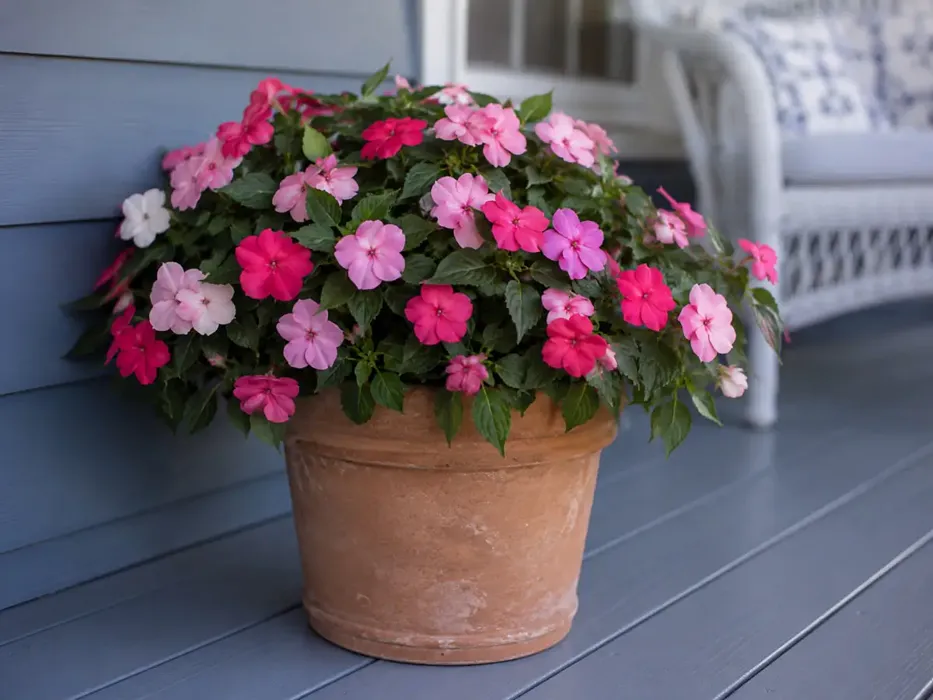
description

Busy Lizzie (Impatiens walleriana) forms low, bushy mounds of soft green leaves and bright five-petalled flowers in shades of pink, red, white, purple, and orange. It is native to eastern Africa but is widely grown as a bedding and container plant for its long flowering season. Its ripe seed pods can burst open at a touch, flinging seeds away—a trait reflected in the name Impatiens, meaning “impatient.”
benefits
- Pet-friendly, non-toxic to animals
- Flowering
- Suitable for containers
How to care for Busy Lizzie
sunlight
In East African woodland, busy lizzies grow in bright shade rather than baking sun. Give them sheltered light at home to keep the leaves fresh and the flowers coming.
Bright, filtered light


Best for flowering. Place near an east-facing window, or a few feet back from a bright south- or west-facing window behind a sheer curtain. Keep it out of hot afternoon sun, which can scorch leaves and fade blooms.
Light shade (tolerated)
It will stay healthy in a shaded patio or a room with softer daylight, but flowering may be lighter and stems may stretch. Move it gradually to a brighter, filtered spot if it becomes sparse.
watering
Keep the compost evenly moist but never waterlogged. Busy Lizzie dries quickly in active growth and may drop flowers if it repeatedly wilts. Water thoroughly until excess drains away, then empty the saucer.
Warm, bright weather


Check every day in summer. Most potted plants need water about every 2-4 days, but small pots, sun, wind, and heat can make this daily. Water when the top 1 cm of compost feels dry and the pot is lighter, before the root ball dries through.
Cool or low-light weather
Growth slows indoors or in cooler conditions, so watering may be needed roughly every 5-10 days. Let the surface dry slightly, then check beneath it before watering. Low light, a large pot, dense compost, and low root activity all slow drying.

humidity
Busy Lizzie comes from moist, sheltered habitats in East Africa, so it appreciates air that is not overly dry, especially while flowering.
Preferred humidity
Average household humidity of 40-60% is usually fine if the compost is kept evenly moist. In dry, heated rooms, flowers and buds may drop, leaf edges can turn crisp, and the plant may wilt quickly even when the soil is damp.
Minimum
Use a small humidifier nearby or group plants together if indoor air stays drier than this. Good airflow still matters, so do not crowd foliage tightly or mist repeatedly.
temperature
Preferred temperature
Winter minimum
Busy Lizzie comes from warm, tropical East African habitats, so it grows best in steady indoor warmth. It can handle slightly warmer conditions with regular watering, but cold slows growth quickly and can damage leaves and flowers.
nutrition
March - September
Feed every 2 weeks while Busy Lizzie is actively growing and flowering with a balanced liquid fertilizer diluted to about half strength. Feed less often in lower light, and stop when growth slows in winter.
Potassium
Potassium supports steady flowering and helps this generous bloomer keep producing buds. A balanced flower or all-purpose fertilizer supplies enough.
Nitrogen
Nitrogen keeps foliage green and supports new growth, but too much can make the plant leafy at the expense of flowers. Avoid strong or overly frequent feeds.
soil
Moisture-retentive, well-draining soil
Busy Lizzie likes roots that stay lightly moist but never waterlogged. Use a fertile potting mix with compost or leaf mould, and add perlite or fine bark if it feels dense.
pH 6,0 - 6,5
This is slightly acidic soil, which suits healthy growth and flowering. Most fresh multipurpose compost is suitable, especially if you water with rainwater or avoid very hard tap water.