
Catnip / Catswort / Catwort
Nepeta cataria
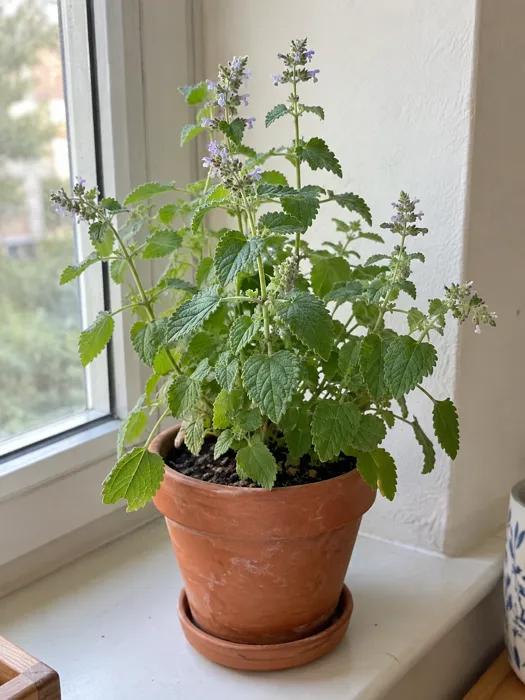
description

Catnip (Nepeta cataria) is a hardy perennial herb with softly gray-green, toothed leaves and small white flowers marked with purple spots. Its leaves release nepetalactone, a compound that can trigger playful rolling or rubbing in many cats. Catswort also attracts bees and other pollinators when it blooms.
How to care for Catnip
sunlight
Catnip grows in open, sunny places, so give it the brightest spot you have. Indoors, place it in a sunny south- or west-facing window; outdoors, choose an open position.
Full sun

Aim for at least 6 hours of direct sun each day. Strong light keeps stems compact and supports leafy growth. If the plant stretches toward the window, develops pale new growth, or has long gaps between leaves, move it closer to stronger light.
watering
Water when the top inch of soil feels dry, then soak the root ball until excess water drains. Catnip tolerates brief dryness once established, but consistently soggy soil can damage its roots.
Active growth


As a starting point, water a potted plant about every 3-7 days. Check the soil first, since bright light, heat, a small pot, or a porous terracotta pot can shorten the interval. Water thoroughly rather than giving frequent small sips.
Cooler or lower-light months
Water roughly every 1-2 weeks, and sometimes less often in cool, dim conditions. Press a finger about an inch into the mix or lift the pot to judge whether it has become noticeably lighter. Let the surface dry between waterings, but do not leave the whole root ball dry for long.

humidity
Catnip is a hardy temperate herb, so it does not need tropical humidity. Average indoor air is usually suitable, provided the plant has good airflow.
Indoor humidity
A preferred range is approximately 40-50%, while about 30-60% is generally acceptable. Very dry air may cause crispy leaf edges, drooping, or slower growth, although wilting can also signal dry soil.
- Use a humidifier nearby, or group catnip with other plants.
- Keep space around the stems open so leaves dry quickly and fungal problems are less likely.
temperature
Active growth
Winter minimum
Catnip is a hardy temperate perennial, so it prefers cool to mild conditions rather than intense heat. Keep it in a bright, airy spot, and protect container plants from prolonged freezing because their roots are more exposed than those in the ground.
nutrition
March - August
Feed catnip approximately every 4 - 6 weeks while it is actively growing, using a liquid fertilizer labeled for herbs or edible crops at about half the label strength. Skip feeding in autumn and winter unless the plant is still producing strong new growth.
Nitrogen
Nitrogen supports catnip's leafy stems and aromatic foliage, and a cautious, regular fertilizer routine usually provides enough.
Potassium
Potassium supports overall vigor and helps the plant cope with flowering and cutting back; a balanced herb fertilizer normally supplies it without extra supplements.
soil
Light, gritty, well-draining soil
Catnip roots prefer a loose, moderately fertile mix that drains quickly and does not stay soggy. Combine quality potting soil with compost and perlite or coarse sand, and use a pot with drainage holes.
pH 6,1 - 7,8
This range is mildly acidic to mildly alkaline. Most general-purpose potting mixes suit catnip; add a little garden lime only if a soil test shows the mix is too acidic.