
Coleus / Painted Nettle / Plectranthus scutellarioides / Solenostemon scutellarioides
Coleus scutellarioides
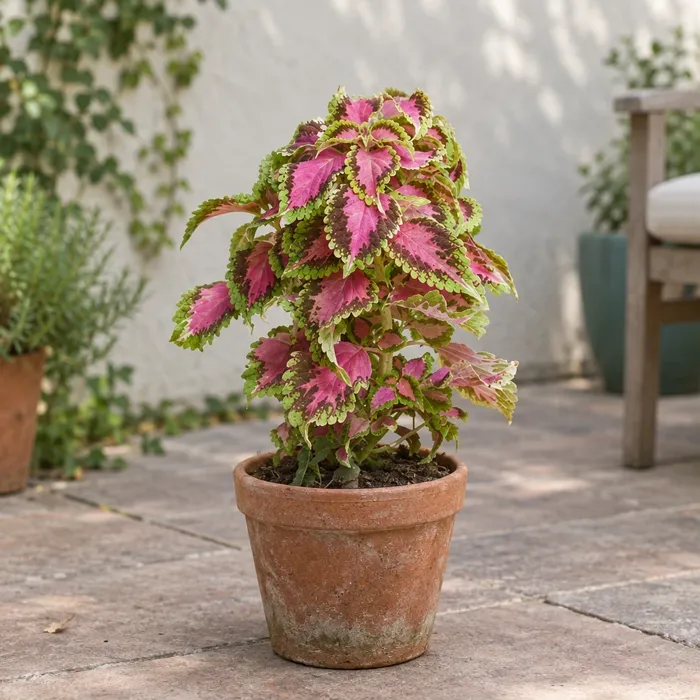
description

How to care for Coleus
sunlight
Coleus grows in bright, filtered light at forest edges and in other warm, open habitats. Give it a bright spot at home to support compact growth and vivid leaf color.
Bright indirect light


Place it near an unobstructed east window or a few feet back from a brighter window. This suits most Coleus, especially shade-preferring cultivars. If stems stretch or colors fade, move it closer to the light.
Gentle direct sun
Morning or late-day sun can intensify color and help keep growth compact. Introduce it gradually, and protect leaves from strong midday and afternoon sun, which may scorch them. Some sun-tolerant cultivars handle more direct light than others.
watering
Keep Coleus soil lightly and consistently moist, but never waterlogged. Water slowly until excess drains from the pot, then empty the saucer.
Spring - Summer


As a starting point, check every 3-5 days and water when the top 1 inch of soil feels dry. Bright light, warm temperatures, small pots, terracotta, and active growth can shorten this interval.
Autumn - Winter
Check roughly every 7-14 days, watering when the top 1-2 inches are dry. Lower light, cooler temperatures, high humidity, and larger or plastic pots usually mean slower drying.

humidity
Coleus comes from warm, humid tropical regions, so moderate humidity helps it keep its foliage fresh and colorful. Aim higher in warm, bright rooms, where leaves lose moisture faster.
Preferred humidity
An indoor range of approximately 40-60% is usually acceptable. If humidity stays below 40%, watch for curled leaves, crispy edges, leaf drop, or more spider mites.
- Group coleus with other plants or run a humidifier nearby, while keeping air moving gently around the leaves.
- Use a hygrometer to check conditions, especially near heating or air-conditioning vents. A pebble tray may help slightly, but keep the pot above the water.
temperature
Preferred temperature
Winter minimum
Coleus grows in warm tropical climates, so keep it in a steady, comfortable room away from cold windows, drafts, and heat vents. Temperatures below 13°C (55°F) may cause drooping, leaf loss, or slow recovery.
nutrition
March - September
Feed approximately every 2 - 4 weeks with a balanced liquid houseplant fertilizer diluted to half strength. Reduce or stop feeding from October to February, unless your Coleus remains actively growing in warm, bright conditions.
Nitrogen
Nitrogen supports Coleus's leafy growth and vivid foliage. A balanced fertilizer usually supplies enough, so do not add extra if growth is soft, stretched, or unusually pale.
Potassium
Potassium supports sturdy growth and overall resilience. Regular, moderate feeding is sufficient, and extra potassium will not make up for poor light or watering problems.
soil
Moist, airy, well-draining soil
Coleus prefers evenly moist roots with plenty of air around them. Use a loose potting mix with perlite, fine bark, or another drainage amendment so it holds moisture without becoming compacted or soggy.
pH 6,0 - 7,0
This range is slightly acidic to neutral. Most quality potting mixes are suitable, so choose a fresh, well-drained blend rather than adjusting the pH precisely.