
Ficus Benjamina
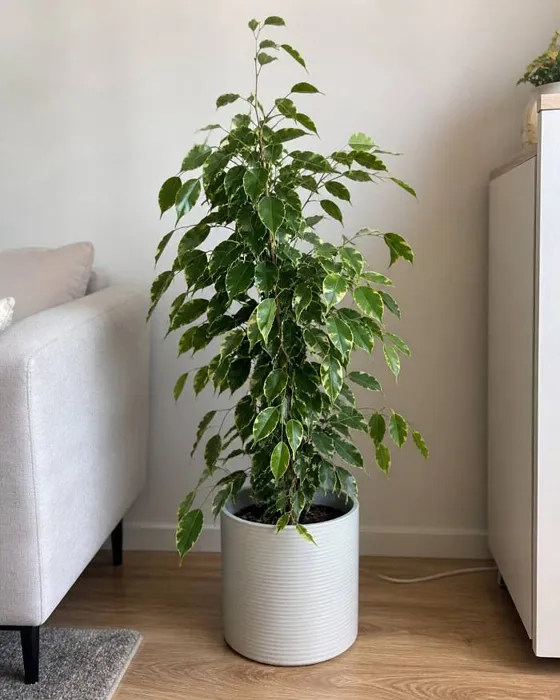
description

Ficus Benjamina, also known as the Weeping Fig, is one of the most elegant indoor trees you can grow at home. Native to Southeast Asia and Australia, it features gracefully arching branches draped with glossy, pointed leaves. It has a reputation for being slightly temperamental — especially when moved — but once it finds its spot and settles in, it rewards you with lush, dramatic greenery for years.
benefits
- Long-lived
- Air-purifying
- Fast-growing
warnings
- Toxic to pets
- Sensitive to cold drafts – avoid windowsills in winter
How to care Ficus Benjamina
watering
The golden rule for Ficus Benjamina: never let it sit in water, and never let it dry out completely. It prefers consistent, moderate moisture.
March – August

Water thoroughly when the top 1–2 inches of soil feel dry. During warm months the plant is actively growing and needs more consistent moisture.
September – February

Reduce watering noticeably. Wait until the top 2–3 inches of soil are dry before watering again. Cold and wet roots is the most common cause of death in winter.

humidity
Ficus Benjamina originates from tropical rainforests and appreciates higher humidity levels. Dry indoor air — especially in winter with heating on — is one of its biggest enemies.
March – August
Aim for at least 50%. The plant will grow actively and look its best at this range.
September – February
Heating systems dry out indoor air significantly. Below 40% you will notice leaf tips browning and increased leaf drop.
temperature
Ficus Benjamina is a tropical plant and hates cold. It is particularly vulnerable to cold drafts from windows, air vents, and doors.
nutrition
Ficus Benjamina is a moderate feeder during the growing season. Over-fertilizing can burn roots and cause salt build-up in the soil.