
Fishbone Cactus / Ric Rac Cactus
Disocactus anguliger
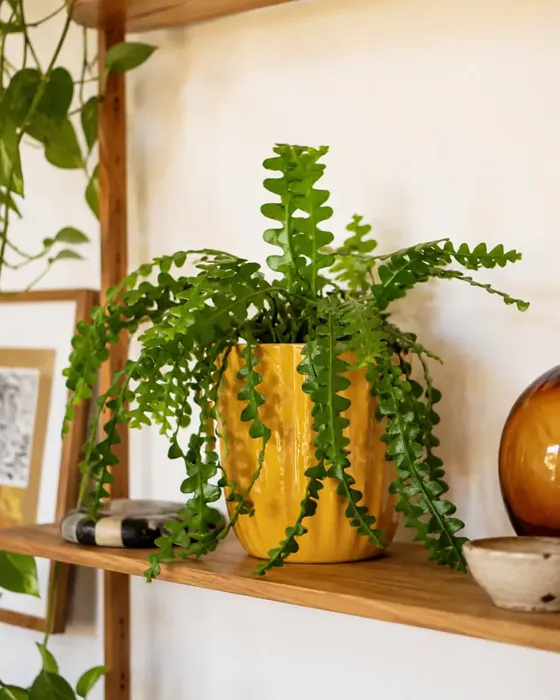
description

Fishbone Cactus (Disocactus anguliger), also called Ric Rac Cactus, is an epiphytic cactus with long, flat stems cut into bold zigzags like a fish skeleton. Rather than growing in desert sand, it naturally clambers through Mexican forests, rooting among tree branches and organic debris. Mature plants can produce large, fragrant white flowers that open for a single night, followed by small edible fruits if pollinated. Its stems are also easy to propagate from cuttings, making it simple to share once established.
benefits
- Low—water tolerant
- Сan handle lower humidity level
- Pet-friendly, non-toxic to animals
- Drought-tolerant — forgives missed waterings
- Low maintenance
- Suitable for containers
How to care for Fishbone Cactus
sunlight
In the wild, Fishbone Cactus grows on trees beneath tropical forest cover, where light is bright but softened by leaves. Give it a bright spot indoors without harsh afternoon sun.
Bright indirect light


Place near an east window, or a little back from a south or west window behind a sheer curtain. A short spell of gentle morning sun is usually fine, but strong direct sun can bleach or scorch the flat stems.
watering
Water thoroughly, then let the mix partly dry before watering again. Fishbone Cactus is an epiphyte, so its roots need air as much as moisture.
Spring and summer


About every 7-10 days is a useful starting point in bright, warm conditions. Water when the top 1-2 inches of mix are dry and the pot feels noticeably lighter, then let excess drain away.
Autumn and winter
Roughly every 2-3 weeks is often enough when growth slows. Check deeper into the pot first: wait until most of the mix has dried, especially in cool or low-light rooms.

humidity
Preferred humidity
As an epiphytic cactus from humid Mexican forests, Fishbone Cactus grows best with moderate to high humidity and gentle airflow.
Acceptable at home
It usually adapts to average indoor air, but prolonged humidity below 40% can leave stems thin or wrinkled, with dry brown edges. Very dry air may also cause flower buds to drop.
- Keep it away from radiators, heat vents, and air conditioning.
- Use a pebble tray with water for a small local boost, but keep the pot above the waterline.
- Improve airflow rather than keeping the plant constantly damp.
temperature
Preferred range
Winter minimum
As an epiphytic cactus from warm forest conditions, Fishbone Cactus prefers steady indoor warmth. It tolerates warmer rooms with good airflow, but cool, damp conditions can damage its roots and stems.
nutrition
March - September
Feed about once a month while stems are actively growing, using a balanced liquid cactus or orchid fertilizer at half the label strength. Stop feeding in winter, or when growth has slowed in cool, low-light conditions.
Phosphorus
Phosphorus supports root health and flower production. A balanced fertilizer provides enough without forcing growth.
Potassium
Potassium helps maintain sturdy, healthy stems and supports flowering. Regular light feeding is more useful than strong doses.
soil
Airy, organic, fast-draining soil
Its epiphytic roots need air as much as moisture, so use a loose mix that holds some water without staying soggy. Combine cactus compost with orchid bark and perlite or pumice for a springy, open texture.
pH 5,5 - 6,5
This is slightly acidic, similar to decomposing leaf litter and bark in its natural habitat. Most peat- or coco-based houseplant mixes fall close to this range, especially when blended with bark.