
Jade Plant / Money Plant
Crassula ovata
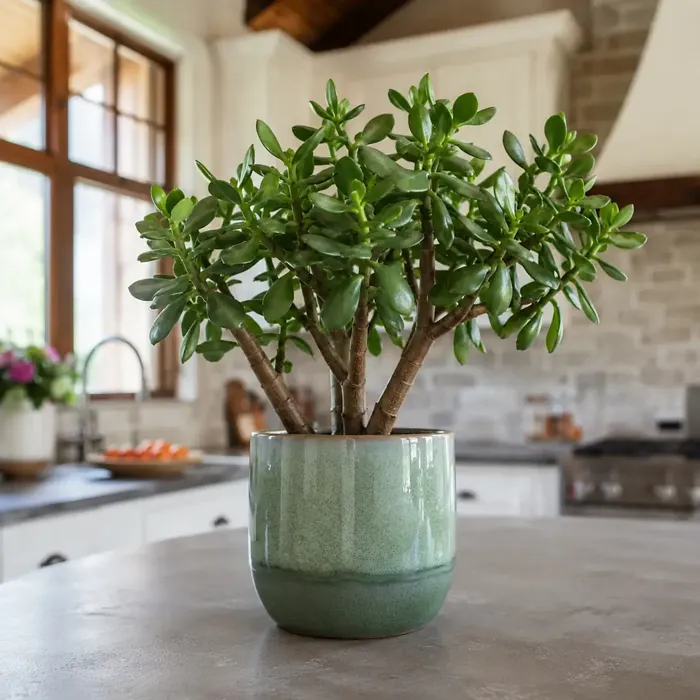
description

Jade Plant (Crassula ovata), also called Money Plant, is a branching succulent with plump, glossy oval leaves and a trunk-like stem that becomes woody with age. Native to southern Africa, it stores water in its leaves, which helps it cope with dry spells. Given time, a mature plant can grow into a small, tree-shaped specimen and may produce clusters of starry white or pink flowers.
benefits
- Low—water tolerant
- Сan handle lower humidity level
- Drought-tolerant — forgives missed waterings
- Low maintenance
- Suitable for containers
warnings
- Toxic to cats
- Toxic to dogs
How to care for Jade Plant
sunlight
In southern Africa, jade plants grow on open, rocky slopes with plenty of sun. Give yours the brightest spot you have, ideally close to a sunny window.
Bright light with some direct sun

A south- or west-facing window is ideal. Aim for several hours of gentle direct sun daily, with bright light for the rest of the day. Acclimate plants gradually to hot midday sun, especially after a dim winter or if moving outdoors.
Low light makes jade plants stretch, with wider gaps between leaves and weaker stems. Variegated forms need especially bright light to keep their coloring.
watering
Let the potting mix dry out completely before watering again. Jade Plant stores water in its leaves and stems, so it is safer slightly dry than regularly damp.
Spring to early autumn


Water thoroughly about every 2-3 weeks, only when the mix is dry from top to bottom and the pot feels noticeably light. Let excess water drain away completely.
Cooler or lower-light months
Growth slows, so watering may be needed only every 3-5 weeks. Check the root ball first, especially if the plant is near a cool window or has dropped leaves.
Bright sun, warmth, a small terracotta pot, and a gritty mix speed drying. Low light, cool rooms, large pots, and dense soil keep moisture longer, so use the soil and pot weight rather than a fixed schedule.

humidity
Typical home humidity
Native to dry parts of southern Africa, Jade Plant is comfortable in average household air and does not need extra humidity. Good airflow matters more than humid air, especially in cool or low-light rooms.
Minimum
Very dry heated air can contribute to slightly wrinkled leaves or dry brown edges, but these signs more often point to thirsty roots. Check that the potting mix has dried fully before watering.
temperature
Preferred range
Winter minimum
Native to warm, dry parts of southern Africa, jade plants are happiest in normal warm indoor conditions. They cope with summer warmth if the soil dries properly, but grow more slowly in cool weather.
nutrition
March - August
Feed about once a month while your Jade Plant is putting out new leaves, using a balanced liquid cactus or houseplant fertilizer diluted to half strength. Skip feeding in autumn and winter, or when growth has paused.
Nitrogen
Nitrogen supports healthy leafy growth. A gentle, balanced fertilizer provides enough without encouraging soft, weak stems.
Potassium
Potassium supports sturdy growth and overall resilience. It is included in most balanced succulent fertilizers.
soil
Gritty, fast-draining soil
Jade Plant roots need air around them and dry quickly after watering. Use a succulent mix loosened with pumice, perlite, or coarse grit, rather than dense potting soil that stays wet.
pH 6,0 - 7,0
This is slightly acidic to neutral, a range most cactus and succulent mixes naturally provide. Choose a fresh, peat or mineral-based succulent mix and avoid adding strongly acidic amendments.