
Maidenhair Vine / Wire Vine / Creeping Wire Vine / Necklace Vine
Muehlenbeckia complexa
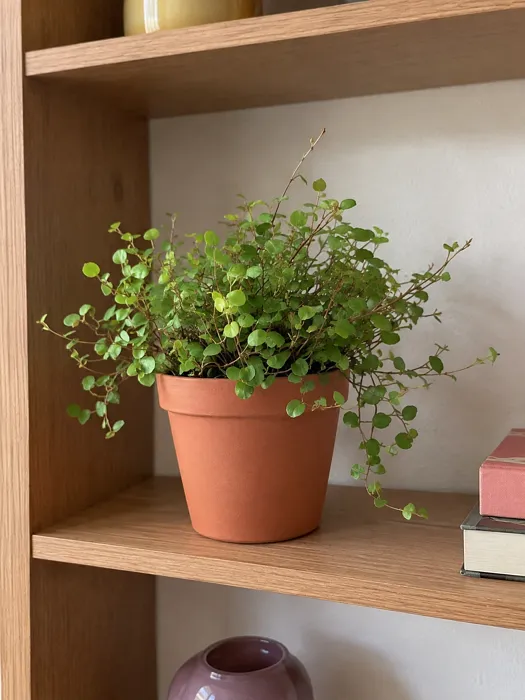
description

Maidenhair vine (Muehlenbeckia complexa) is a tangle of fine, dark wiry stems dotted with small, rounded green leaves. Native to New Zealand, it naturally scrambles and twines through shrubs and over rocks, making its growth look like a living wire net. Its flexible stems can trail from a pot or quickly weave around a small support.
benefits
- Pet-friendly, non-toxic to animals
- Flowering
- Fast-growing
- Suitable for containers
- Frost hardy
How to care for Maidenhair Vine
sunlight
In New Zealand, maidenhair vine scrambles through bright coastal and woodland-edge sites. Give it strong indoor light to keep its fine stems leafy and compact.
Bright indirect light


Place near an east, west, or bright south-facing window, just out of intense midday rays. A little gentle morning sun is usually welcome.
Tolerates medium indirect light
It can cope farther from a bright window, but growth becomes looser and less leafy. Move it closer if stems stretch with wide gaps between leaves.
watering
Keep maidenhair vine lightly and evenly moist, but never leave it sitting in water. Let the surface dry slightly before watering again.
Spring and summer


Water thoroughly about every 5-8 days in bright, warm conditions. Check first: the top 1-2 cm of soil should feel dry, while the soil below is still faintly moist.
Autumn and winter
Growth slows in lower light, so watering is often needed roughly every 10-14 days. Let a little more of the mix dry, then water before the root ball becomes completely dry.
Expect faster drying in strong light, warmth, small terracotta pots, or a coarse mix. Cool rooms, shade, high humidity, and a larger plastic pot keep soil wet for longer.

humidity
Humidity
Maidenhair vine comes from New Zealand habitats that can be breezy rather than tropical, so it is usually comfortable in average household humidity. Aim for 40-60% where possible. It can manage slightly drier air if watering is steady, but prolonged air below about 35% may cause crisp leaf edges, leaf drop, and dry-looking new growth.
Group it with other plants or use a pebble tray with water nearby during the heating season. Good airflow is helpful, but avoid placing it in a constant hot or cold draft.
temperature
Preferred range
Winter minimum
Native to New Zealand's mild maritime climate, maidenhair vine is comfortable in cool rooms and handles gentle temperature changes well. Prolonged heat above 27°C (80°F) can dry the fine foliage quickly, especially in direct sun.
nutrition
March - August
Feed about every 4-6 weeks with a balanced liquid houseplant fertilizer at half strength. Apply it to already moist soil while the vine is actively growing. Stop feeding in winter, or wait until you see fresh growth again.
Nitrogen
Nitrogen supports the dense, small-leaved growth that makes maidenhair vine look full. A balanced fertilizer supplies enough without pushing weak, overly soft stems.
soil
Moist but free-draining soil
Maidenhair vine likes roots that stay lightly moist but never sit in water. Use a quality potting mix loosened with perlite, pumice, or fine bark so excess water drains quickly while some moisture remains around the roots.
pH 6,0 - 7,0
This is slightly acidic to neutral, which suits this adaptable vine. Most standard indoor potting mixes fall close to this range, so no special adjustment is usually needed.