
Peacock Plant / Calathea makoyana
Goeppertia makoyana
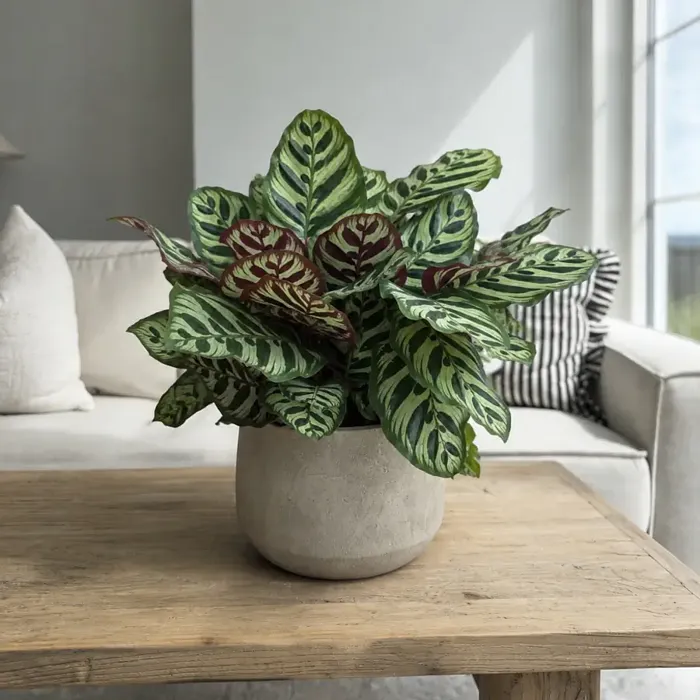
description

Peacock Plant is a tropical foliage plant with translucent feather-like leaf markings.
benefits
- Pet-friendly, non-toxic to animals
- Suitable for containers
How to care for Peacock Plant
sunlight
In its Brazilian forest-floor habitat, Peacock Plant receives filtered light through the canopy. Give it a bright spot with softened light at home to keep the leaf pattern clear and the foliage full.
Bright indirect light


Ideal near an east or north window, or a few feet back from a brighter window behind a sheer curtain. Direct sun can bleach or scorch the thin leaves.
Medium indirect light - tolerated
It will cope with gentler daylight, but growth may slow and markings can look less defined. Move it closer to filtered light if new leaves are small or sparse.
watering
Keep the potting mix lightly and evenly moist, never soggy. Water thoroughly when the surface has dried, then let excess drain away.
Spring and summer


Expect to water about every 5-7 days in bright, warm conditions. Check that the top 1 in / 2-3 cm feels dry while the soil below is still faintly moist before watering.
Autumn and winter
Growth slows in lower light, so watering is often needed roughly every 10-14 days. Let the top layer dry, then check deeper with a finger or wooden stick before watering.
These are starting points: a small terracotta pot, warm room, bright light, and airy mix dry faster than a large plastic pot in cool, humid conditions. Use room-temperature filtered, rain, or distilled water if tap water leaves brown leaf edges.

humidity
Preferred humidity
Peacock Plant comes from Brazil's humid forest understory, so it keeps its patterned leaves looking best in consistently moist air. Average household humidity of 40-60% is usually workable if watering and light are right.
Too dry
Dry air can cause brown, crisp leaf edges, curling leaves, or new leaves that struggle to unfurl. Check that the soil is not staying too dry as well, since both problems can look similar.
- Keep it away from heating vents, air conditioners, and drafty windows.
- Use a hygrometer to check the spot, especially during the heating season.
- A pebble tray offers only a small, local boost and will not replace a humidifier in very dry rooms.
temperature
Preferred range
Winter minimum
Peacock Plant comes from warm, sheltered tropical forest floors, so it prefers steady indoor warmth. Keep it away from hot radiators and air-conditioning, which can dry the leaves and cause curling.
nutrition
March - August
Feed about once a month while the plant is putting out new leaves. Use a balanced liquid houseplant fertilizer at half the label strength, applied to already-moist soil. Stop feeding in autumn and winter unless it is actively growing in warm, bright conditions.
Nitrogen
Nitrogen supports the Peacock Plant's leafy growth and rich green color. A balanced fertilizer used lightly provides enough without pushing soft, stressed growth.
soil
Airy, moisture-retentive soil
Peacock Plant likes roots that stay lightly moist but still get air. Use a peat-free houseplant mix loosened with perlite and fine orchid bark or coco chips, in a pot with drainage holes.
pH 5,5 - 6,5
This is mildly acidic, which suits this tropical understory plant. Most quality houseplant mixes fall close to this range, so avoid adding lime or using strongly alkaline garden soil.