
Pink Quill / Tillandsia cyanea
Wallisia cyanea
description

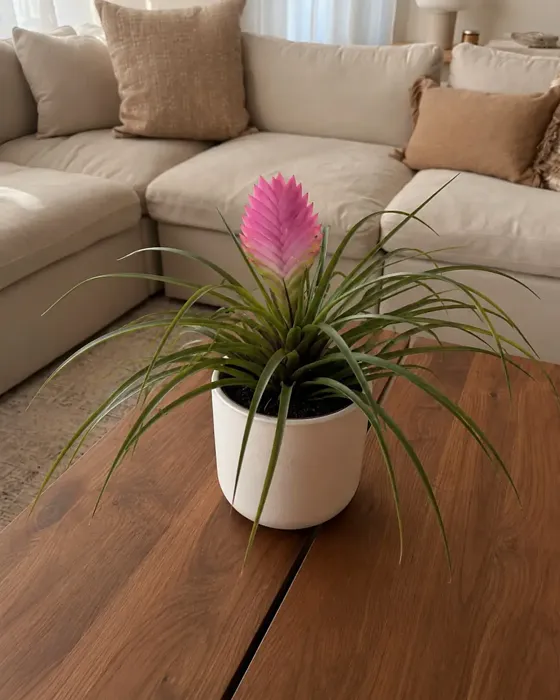
Pink Quill (Wallisia cyanea, formerly Tillandsia cyanea) is a bromeliad with a tidy fountain of narrow green leaves and a flattened, pink, feather-like flower spike. Small violet-blue flowers emerge one at a time from the pink bracts, creating a striking contrast. After flowering, the main rosette gradually fades but produces pups at its base, which can grow into new plants.
benefits
- Pet-friendly, non-toxic to animals
- Suitable for containers
How to care for Pink Quill
sunlight
In Ecuadorian forest, Pink Quill grows in filtered light beneath other plants. Give it a bright spot indoors, protected from intense sun.
Bright indirect light


Place it near an east window, or a little back from a south or west window with a sheer curtain. A little gentle morning sun is usually fine, but strong direct sun can fade the pink bract and scorch leaves.
watering
Keep the potting mix lightly moist, never soggy. Pink Quill is a rooted bromeliad, so water the roots well and let excess drain away.
Active growth


In warm, bright conditions, water about every 5-7 days. Water when the top 1-2 cm of mix feels dry and the pot is noticeably lighter, while the root ball is still faintly moist.
Cooler or lower-light months
Water roughly every 10-14 days, letting more of the mix dry between drinks. Slow growth, cool temperatures, a large pot, or dense compost all mean less frequent watering.

humidity
Preferred humidity
Pink Quill comes from humid Ecuadorian forests, so it stays happiest in moderately humid indoor air. It usually tolerates typical home humidity above 40%, especially with good watering and bright indirect light.
Minimum
Air that is too dry can cause brown, crisp leaf tips, curling leaves, and flowers that fade sooner. Keep it away from radiators, heating vents, and hot drafts.
- Group plants together to create a slightly more humid pocket of air.
- Use a humidifier during heated winter months if humidity regularly falls below 40%.
- Keep gentle airflow around the leaves so consistently damp air does not encourage rot.
temperature
Preferred range
Winter minimum
Pink Quill comes from warm, humid forest conditions, so it is happiest in steady indoor warmth. Keep it away from chilly windows and avoid prolonged heat from radiators, which can dry the leaves and bract.
nutrition
March - August
Feed about once a month while it is making new leaves, using a balanced liquid houseplant or bromeliad fertilizer at quarter to half strength. Apply to already-moist potting mix, then pause in autumn and winter unless it is actively growing.
Nitrogen
Nitrogen supports the arching green foliage. Regular light feeding is enough - too much can leave soft growth and brown leaf tips.
Potassium
Potassium supports sturdy growth and flowering. A balanced fertilizer provides it without pushing the plant too hard.
soil
Airy, moisture-holding mix
Pink Quill needs oxygen around its fine roots but should not dry out like a true air plant. Use an orchid or bromeliad mix, or combine potting mix with fine bark and perlite, in a pot with drainage.
pH 5,5 - 6,5
This is mildly acidic, which suits most bark-based and peat-free houseplant mixes. Choose a mix labeled for orchids, bromeliads, or acid-loving plants rather than adding garden soil or lime.