
Rex Begonia / Painted-Leaf Begonia / King Begonia
Begonia rex-cultorum Group
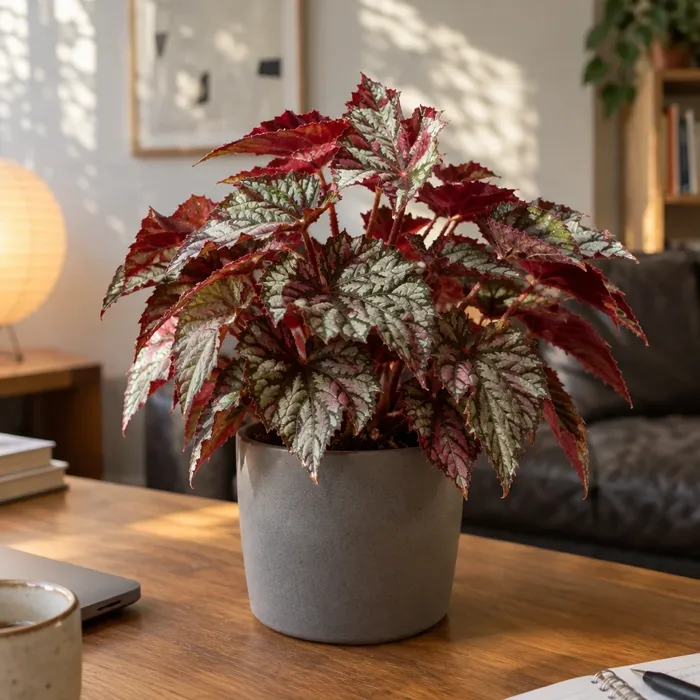
description

How to care for Rex Begonia
sunlight
Rex Begonias grow beneath tropical forest canopies, where light is bright but softened by leaves. Place yours near an east or north window, or a little back from a brighter window with sheer-filtered light.
Bright indirect light


Give it plenty of filtered light to support compact growth and vivid foliage. Darker-leaved cultivars may manage slightly less light, while silver or strongly variegated forms usually need a brighter position. Move it farther from the glass if leaves bleach, fade, or develop dry brown patches.
watering
Keep the potting mix lightly and evenly moist, but never waterlogged. Water when the top 1-2 cm feels dry, then let excess drain fully.
Spring - Summer


As a starting point, check the plant about every 5-8 days. Water thoroughly until it drains from the pot, then empty the saucer. Bright light, warmth, a small pot, or a fast-draining mix may require more frequent watering.
Autumn - Winter
Check roughly every 10-14 days, watering when the surface has dried but the root ball is not dry throughout. Lower light, cooler temperatures, higher humidity, a larger pot, or a moisture-retentive mix can lengthen the interval.

humidity
Rex Begonias come from warm, humid forest habitats. Aim for steady indoor humidity, especially when heating or air conditioning is running.
Preferred humidity
An approximate household range of 40-60% is usually acceptable. If the air stays below about 40%, watch for crispy brown edges, curling leaves, or leaf drop. Keep the plant away from heaters, drafts, and strong air vents.
- Use a hygrometer to check the air rather than relying on feel.
- Improve airflow around the leaves, and avoid frequent misting, which can leave foliage wet and encourage leaf disease.
temperature
Preferred temperature
Winter minimum
Rex Begonias come from warm, humid forest environments and prefer stable indoor temperatures. Keep them above 15°C (59°F), and provide airflow if temperatures rise above 27°C (80°F).
nutrition
March - September
Feed approximately every four weeks with a balanced liquid houseplant fertilizer diluted to half the label strength, applying it to already moist soil. Reduce or stop feeding from October through February, especially if growth slows or light levels drop. Slow-growing cultivars may need less frequent feeding.
Nitrogen
Nitrogen supports the colorful leaves and steady growth of Rex Begonia. A cautious, regular dose provides enough without encouraging soft, overly green growth that can hide the leaf pattern.
Potassium
Potassium supports overall plant strength and helps the plant use water efficiently. A complete houseplant fertilizer normally supplies enough, so extra supplements are rarely needed.
soil
Airy, moisture-retentive soil
Rex Begonias prefer roots that stay lightly moist but never waterlogged. Use a loose potting mix with coco coir or peat, perlite, and a little fine bark to retain moisture while keeping air around the shallow roots.
pH 5,5 - 6,5
This is mildly acidic to slightly acidic. A standard houseplant mix is usually suitable; if it is dense or dries slowly, add perlite and bark rather than extra moisture-retaining material.