
Rex Begonia Vine / Tapestry Vine
Cissus discolor
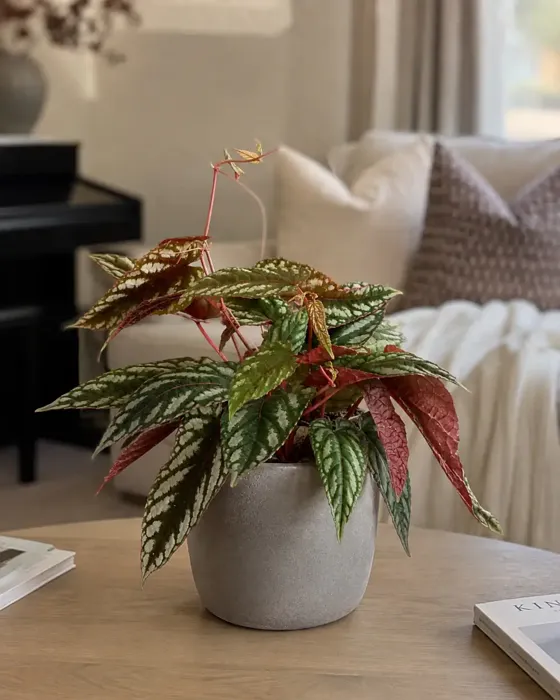
description

Rex begonia vine, or Cissus discolor, is a climbing vine with long, pointed leaves marked in silver, green, and burgundy, with deep purple undersides. Also called tapestry vine, it trails or climbs using slender tendrils, creating a layered curtain of patterned foliage. Despite its name, it is not a begonia but a member of the grape family. Native to tropical Southeast Asia, it is most striking when kept in the warm, humid conditions that support its lush growth.
benefits
- Fast-growing
- Suitable for containers
How to care for Rex Begonia Vine
sunlight
In tropical forest understories, Rex Begonia Vine climbs through bright, filtered light. Place it near a bright window with the sun softened by a sheer curtain or set back from the glass.
Bright indirect light


Bright indirect light keeps the silver and burgundy leaf pattern strongest. A little gentle morning sun can work, but protect it from hot midday or afternoon rays, which can scorch the thin leaves. Dim rooms lead to lanky growth and duller color.
watering
Keep Rex Begonia Vine lightly and evenly moist, but never leave its roots sitting in water. Water thoroughly once the top 2-3 cm of mix has dried.
Spring to early autumn


In active growth, this is often about every 4-7 days. Check the soil first: it should feel dry at the surface but still faintly moist below. Soak until water drains out, then empty the saucer.
Cooler or lower-light months
Expect roughly every 10-14 days, sometimes longer in a cool room. Let a little more of the mix dry before watering, but do not allow the root ball to become completely dry for long.
These are starting points: bright light, warmth, small pots, and airy mixes dry faster, while lower light, high humidity, large pots, and dense soil slow drying.

humidity
Native to warm, humid tropical forest, Rex Begonia Vine keeps its patterned leaves best when the air is not dry.
Preferred humidity
Average home humidity is usually tolerated if it stays above about 40%, but higher humidity supports fuller growth. Dry air can cause crisp brown leaf edges, curling, and leaves that fade or drop.
- Group it with other plants or use a pebble tray with water below the pot.
- Keep it away from radiators, heating vents, and air conditioning.
- Give it gentle airflow, especially in a humid room, so leaves do not stay damp.
temperature
Preferred range
Winter minimum
Native to warm, humid tropical forests, Rex Begonia Vine grows best in steady indoor warmth. Keep it away from chilly windows and doors in winter, and avoid placing it directly in the path of heating or air-conditioning vents.
nutrition
March - September
Feed about every 2-4 weeks while the vine is actively producing new leaves, using a balanced liquid houseplant fertilizer diluted to half strength. Feed less often in lower light, and pause in winter if growth slows.
Nitrogen
Nitrogen supports the lush, colorful foliage. A balanced fertilizer applied lightly provides enough without pushing weak, stretched growth.
soil
Rich, airy, moisture-holding soil
Rex Begonia Vine likes its roots evenly moist but never heavy or waterlogged. Use a peat- or coco-based houseplant mix loosened with perlite and fine bark, with a little compost or worm castings for gentle nutrition.
pH 5,5 - 6,5
This is slightly acidic, which suits this tropical vine. Most quality indoor potting mixes fall close to this range; avoid adding lime unless a soil test shows it is needed.