
Spider Plant / Ribbon Plant
Chlorophytum comosum
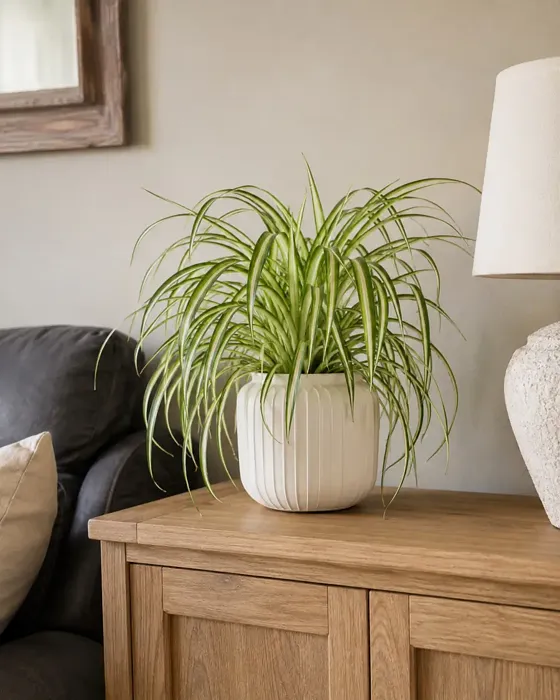
description

Spider Plant is an easy arching plant that produces hanging plantlets on long stems.
benefits
- Pet-friendly, non-toxic to animals
- Suitable for containers
How to care for Spider Plant
sunlight
In southern Africa, spider plants grow in filtered light beneath shrubs and trees. At home, give them bright, indirect light for the fullest growth and strongest variegation.
Bright indirect light


Place near an east window, or a few feet back from a south or west window behind a sheer curtain. Avoid strong midday sun, which can bleach or scorch the leaves.
Lower light tolerated
It will cope with a dimmer room, but growth slows and variegated varieties may become less distinct. Move it closer to a window if new leaves are small or pale.
watering
Water thoroughly, then let the top 1-2 inches of soil dry before watering again. Spider plants tolerate a brief dry spell better than constantly wet roots.
Spring and summer


In active growth, this is often about every 5-10 days. Check the soil first, then water slowly until excess runs from the drainage holes and empty the saucer.
Autumn and winter
In cooler or lower light, water roughly every 10-21 days, once the upper half of the potting mix feels dry and the pot is noticeably lighter.

humidity
Preferred humidity
Spider plants come from warm parts of Africa and appreciate moderate humidity, but adapt well to most homes. Typical indoor levels of about 30-50% are usually fine.
Very dry air can make leaf tips turn brown or crisp, especially near heaters or air conditioning. Brown tips can also come from mineral buildup in tap water, so humidity is not always the only cause.
How to increase humidity
- Group plants together or use a small humidifier nearby.
- Move it a little farther from radiators and hot, sunny windows.
- Aim for at least 40% humidity if crisp tips keep appearing in winter.
temperature
Preferred temperature
Winter minimum
Spider plants come from warm African woodland habitats and prefer steady room temperatures. Growth slows in cooler rooms, while prolonged heat above 27°C (80°F) can dry the soil and leaf tips faster.
nutrition
March - August
Feed about once a month while the plant is making new leaves or plantlets. Use a balanced liquid houseplant fertilizer at half the label strength. Pause feeding in autumn and winter unless it is actively growing in bright, warm conditions.
Nitrogen
Nitrogen supports the leafy growth that keeps a spider plant full and green. A balanced fertilizer provides enough without pushing soft, floppy growth.
Potassium
Potassium supports sturdy growth and overall resilience. It is supplied by a general houseplant fertilizer, so separate supplements are rarely needed.
soil
Loose, moisture-retentive soil
Spider plants like a mix that holds some moisture but lets excess water drain freely, keeping their fleshy roots from staying soggy. Use regular potting mix with perlite or fine orchid bark for extra air around the roots.
pH 6,0 - 7,0
This is slightly acidic to neutral, a range most houseplant potting mixes naturally provide. Choose a fresh indoor potting mix and avoid strongly acidic specialty mixes.