
String of Dolphins / Dolphin Plant
Curio × peregrinus
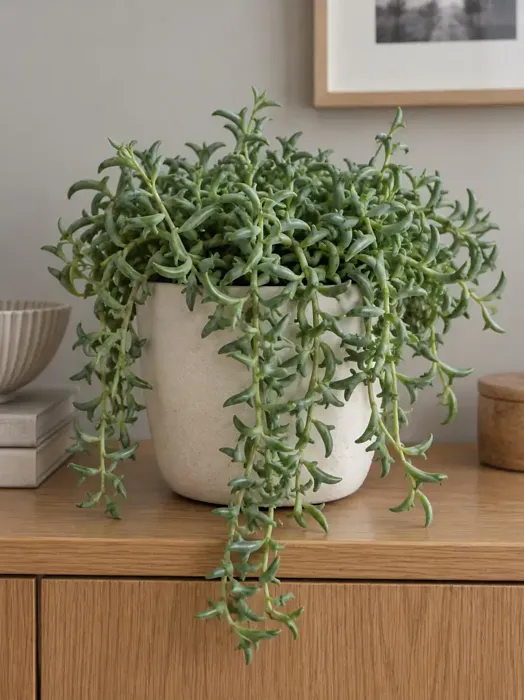
description

String of Dolphins (Curio × peregrinus) trails in long strands lined with plump leaves that look like tiny leaping dolphins, complete with fin-like points. It is a hybrid, widely considered to come from String of Pearls and the more upright Curio articulatus. Its stems readily root at the nodes, so a short cutting can grow into a new plant.
benefits
- Low—water tolerant
- Сan handle lower humidity level
- Drought-tolerant — forgives missed waterings
- Low maintenance
- Suitable for containers
warnings
- Toxic to cats
- Toxic to dogs
How to care for String of Dolphins
sunlight
String of Dolphins comes from sun-loving southern African succulent parents, so it stays fullest in a very bright spot at home. Give it strong light without prolonged hot midday sun through glass.
Bright indirect light


Place near an east, west, or bright south-facing window, just back from the glass or behind a sheer curtain. Low light makes stems stretch and leaves grow farther apart.
Gentle direct sun
A few hours of morning or late-afternoon sun can encourage compact growth. Acclimate it gradually, and protect it from intense summer midday sun, which can scorch the leaves.
watering
Water deeply only when the potting mix has dried almost completely. This trailing succulent stores water in its dolphin-shaped leaves, so consistently damp soil causes more trouble than a short dry spell.
Spring and summer


Check about every 1-2 weeks. Water thoroughly until it runs from the drainage hole only when the mix is dry nearly to the bottom and the pot feels light. Bright light, warmth, small pots, and a gritty mix can shorten the interval.
Autumn and winter
In lower light and cooler rooms, water roughly every 3-4 weeks, after checking that the root ball is dry. A cool, dim spot or a large glazed pot may need water less often.

humidity
Everyday humidity
This trailing succulent descends from dry-climate Curio parents, so average home humidity suits it well. It tolerates roughly 30-50% humidity when watered appropriately; avoid consistently damp, stagnant air.
How to increase humidity
- Move it away from heating or air-conditioning vents.
- Group it with other plants or use a small humidifier nearby if indoor air stays below about 30%.
- Keep good airflow and let the soil dry well between waterings.
temperature
Preferred temperature
Winter minimum
This trailing succulent comes from dry, mild South African conditions, so it is happiest in steady indoor warmth. It can handle warmer weather with bright light and airflow, but keep it drier and out of harsh, hot window glass.
nutrition
March - August
Feed about once a month while the plant is making new trailing growth. Use a balanced liquid fertilizer for cacti and succulents at half the label strength, applied to already-moist soil. Stop feeding in autumn and winter unless it is clearly growing in warm, bright conditions.
Nitrogen
Nitrogen supports new stems and leaves, but too much can make this succulent soft and stretched. A diluted cactus fertilizer provides enough without pushing weak growth.
soil
Gritty, fast-draining soil
Its fine succulent roots need air around them and should not sit wet. Use a cactus mix loosened with pumice, perlite, or coarse grit, aiming for a mix that drains quickly but holds a little moisture.
pH 6,0 - 7,0
This is slightly acidic to neutral, a range most ready-made cactus mixes suit well. Avoid strongly acidic peat-heavy mixes unless you add plenty of mineral drainage material.