
String of Hearts / Rosary Vine
Ceropegia woodii
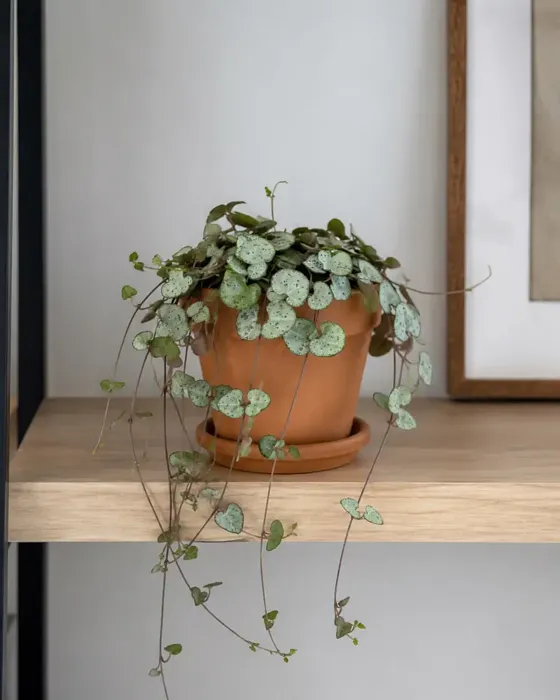
description

String of Hearts (Ceropegia woodii), also called Rosary Vine, sends out long, threadlike stems dotted with small, silver-marbled heart leaves. Its trailing vines can spill elegantly from a shelf or basket, while tiny potato-like tubers sometimes form along the stems, giving the plant its rosary-like nickname. Those little tubers can root and grow into new plants, making propagation especially satisfying.
benefits
- Pet-friendly, non-toxic to animals
- Suitable for containers
How to care for String of Hearts
sunlight
In its South African habitat, String of Hearts trails through other plants in bright, broken light. At home, strong indirect light keeps the vines compact and the leaf pattern clear.
Bright indirect light


Place it near an east or west window, or a little back from a bright south-facing window. Low light is tolerated, but vines may stretch and leaves become more widely spaced.
Gentle direct sun
A few hours of early morning or late afternoon sun can encourage fuller growth. Introduce stronger sun gradually, and keep it out of intense midday rays behind hot glass.
watering
Spring and summer


Water thoroughly about every 1-2 weeks, then let excess drain away. Check that the mix is dry throughout the pot and the pot feels light before watering. Bright light, warmth, a small terracotta pot, and an airy mix can make it dry faster.
Autumn and winter
In cooler, lower-light conditions, water roughly every 2-4 weeks. Wait for the mix to dry completely, and water less if growth has slowed. A larger plastic pot, dense soil, low light, or cool rooms will extend the interval.

humidity
Average home humidity
String of Hearts comes from seasonally dry parts of southern Africa, so it is comfortable in typical indoor air and does not need tropical humidity. It usually tolerates around 30% humidity, but grows best with moderate humidity and good airflow.
Air that stays very dry can cause crisp leaf edges, shrivelled new growth, or slow growth. Check the potting mix too, as underwatering can cause similar symptoms.
When your home is very dry
- Keep it away from radiators, heating vents, and hot afternoon airflow.
- Use a small humidifier nearby if humidity remains below about 30%, especially during winter heating.
- Group plants together, but leave space between stems for airflow.
temperature
Preferred range
Winter minimum
Native to warm South African habitats, String of Hearts is happiest in steady indoor warmth. Keep it above 10°C (50°F), and protect it from prolonged heat above 27°C (80°F), especially if the soil stays wet.
nutrition
March - August
Feed about every 4-6 weeks while it is actively growing, using a balanced liquid houseplant fertilizer at roughly half the label strength. Stop feeding in autumn and winter unless it is still making clear new growth in bright light.
Nitrogen
Nitrogen supports the leafy trailing vines. A diluted balanced fertilizer provides enough without pushing soft, stretched growth.
soil
Gritty, fast-draining soil
Its fine, tuber-forming roots dislike staying wet. Use a succulent or cactus mix loosened with perlite, pumice, or fine orchid bark so water drains quickly while a little organic material remains around the roots.
pH 6,0 - 7,0
This is slightly acidic to neutral, a range most ready-made cactus mixes fall within. Avoid strongly alkaline garden soil, and refresh tired, compacted potting mix when repotting.