
Swiss Cheese Vine / Monkey Mask / Five Holes Plant
Monstera adansonii
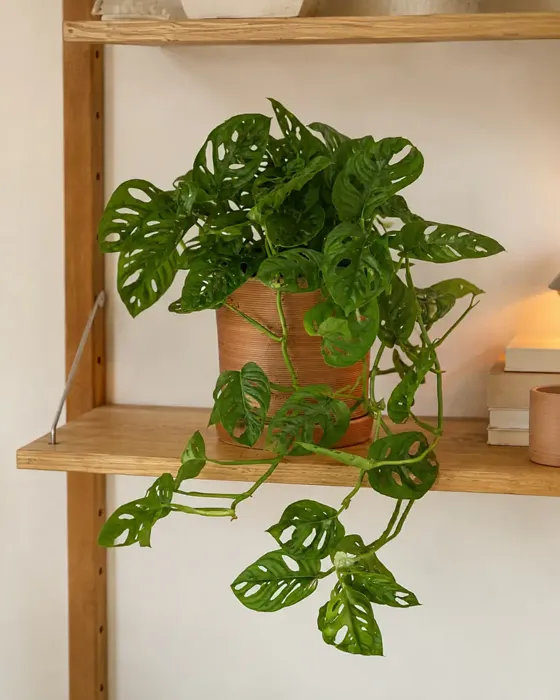
description

Swiss Cheese Vine, Monstera adansonii, is a climbing tropical aroid with slender stems and oval green leaves punctured by neat, leaf-like holes. Also called Monkey Mask or Five Holes Plant, it can trail from a hanging pot or climb a support, often producing larger, more fenestrated leaves as it matures. In its Central and South American forest habitat, the openings may help the leaves withstand heavy rain and wind while letting light reach lower foliage.
benefits
- Fast-growing
- Suitable for containers
warnings
- Toxic to cats
- Toxic to dogs
How to care for Swiss Cheese Vine
sunlight
In tropical forests, Swiss Cheese Vine climbs beneath the canopy in filtered light. At home, give it bright indirect light for fuller growth and more evenly perforated leaves.
Bright indirect light


Place near an east or north window, or a few feet back from a bright south or west window. Variegated forms need the brighter end of this range to maintain their pattern.
Medium light - tolerated
It will cope with a moderately lit spot, but growth may slow and new leaves may be smaller or less perforated. Avoid deep shade.
watering
Swiss Cheese Vine prefers lightly moist soil while it is actively growing, but it declines in soggy compost. Water slowly until it runs from the drainage holes, then empty the saucer.
Spring and summer


In bright, warm conditions, this is often about every 7-10 days. Check the soil first: the surface should be dry and the pot noticeably lighter, while some moisture remains deeper around the roots.
Autumn and winter
With lower light and cooler temperatures, water roughly every 2-3 weeks. Wait until the top 2 inches are dry, and check deeper before watering if the pot still feels heavy.

humidity
Preferred humidity
As a tropical forest climber, Swiss Cheese Vine appreciates humid air. It usually adapts well to average indoor humidity of about 40-50%, but grows best with steadier moisture in the air.
Dry heated rooms in winter are the most common challenge. Keep it away from radiators and air-conditioning vents.
How to increase humidity
- Run a humidifier nearby, especially if humidity stays below 40%.
- Group plants together to create a slightly more humid pocket of air.
- Use a small hygrometer so you can respond to the room, not guess.
temperature
Preferred temperature
Winter minimum
Native to warm tropical forests, Swiss Cheese Vine grows best in steady indoor warmth. Keep it away from chilly windows, air-conditioning, and heating vents, as sudden swings can slow growth and damage leaves.
nutrition
March - August
Feed about once a month while the vine is making new leaves, using a balanced liquid houseplant fertilizer diluted to half strength. Feed less often if growth is slow, and pause during the darker months unless it is still actively growing.
Nitrogen
Nitrogen supports the leafy, climbing growth Swiss Cheese Vine is grown for. A balanced fertilizer provides enough when used lightly during the growing season.
soil
Chunky, moisture-retentive, well-draining soil
Swiss Cheese Vine likes roots that stay lightly moist but still get plenty of air, like they would in loose tropical forest debris. Mix regular potting soil with orchid bark and perlite or pumice to create a springy, fast-draining blend that does not compact.
pH 5,5 - 7,0
This is slightly acidic to neutral, a range most good-quality houseplant mixes naturally provide. Use fresh potting mix with bark-based amendments, rather than garden soil, to keep the roots healthy and the pH suitable.