
Zebra Haworthia / Zebra Plant
Haworthiopsis attenuata
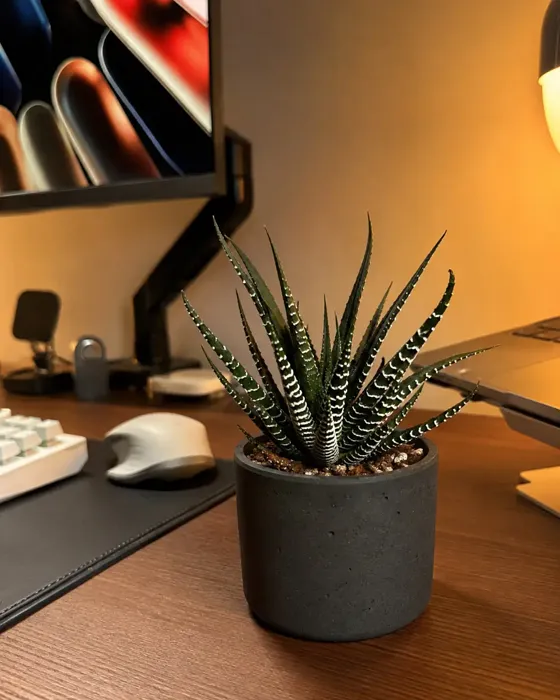
description

Zebra Haworthia is a small rosette succulent with raised white bands across dark leaves.
benefits
- Low—water tolerant
- Сan handle lower humidity level
- Pet-friendly, non-toxic to animals
- Drought-tolerant — forgives missed waterings
- Low maintenance
- Suitable for containers
How to care for Zebra Haworthia
sunlight
In its South African habitat, Zebra Haworthia often grows sheltered by rocks or other plants. Give it bright, filtered light indoors rather than a hot, exposed windowsill.
Bright indirect light


Place near an east window, or a few feet back from a south or west window. Gentle morning sun is usually fine, but strong afternoon sun can bleach or scorch the leaves.
watering
Water only after the potting mix has dried all the way through. Zebra Haworthia stores water in its leaves, so keeping the roots wet is far riskier than letting it stay dry for a few extra days.
Brighter, active growth


In spring and fall, water about every 2-3 weeks. Soak the mix until water runs from the drainage hole, then empty the saucer. Check that the mix is dry to the bottom before watering again.
Cooler or low-light months
Water roughly every 4-6 weeks, and less if the plant is cool or barely growing. A light pot and dry mix throughout the root ball are better signals than the calendar.

humidity
Typical home humidity
Native to dry, airy parts of South Africa, Zebra Haworthia is comfortable in average household air. It tolerates roughly 25-60% humidity, but prefers moderate humidity with good airflow. Persistently damp, stagnant air can encourage rot.
Very dry air may contribute to brown leaf tips or leaves that look thin and wrinkled, especially if the potting mix is also staying dry too long. Check the soil before assuming humidity is the cause.
- Use a small humidifier nearby only if several plants are struggling with dry air.
- Keep the rosette dry and let fresh air circulate around the plant.
temperature
Preferred temperature
Winter minimum
Native to South Africa, Zebra Haworthia prefers warm, stable indoor conditions. It can cope with brief spells near 10°C (50°F) when kept dry, but grows best at 18-27°C (65-80°F).
nutrition
March - September
Feed about once a month while it is actively growing, using a cactus or succulent fertilizer diluted to half the label strength. Skip feeding in winter and whenever growth has slowed, especially in low light.
Nitrogen
A small amount supports healthy new leaves, but too much can make the rosette soft and stretched. A diluted succulent fertilizer provides enough.
Potassium
Potassium supports sturdy growth and general resilience. It is supplied by a balanced cactus or succulent fertilizer.
soil
Gritty, fast-draining soil
Zebra Haworthia has fine roots that rot easily in dense, slow-drying compost. Use cactus soil loosened with plenty of pumice, perlite, or coarse grit so water drains quickly and air reaches the roots.
pH 6,0 - 7,0
This is slightly acidic to neutral, a range most cactus and succulent mixes naturally suit. Choose a peat- or coir-based succulent mix with mineral grit rather than trying to adjust pH at home.