
Zonal Geranium / Garden Geranium
Pelargonium × hortorum
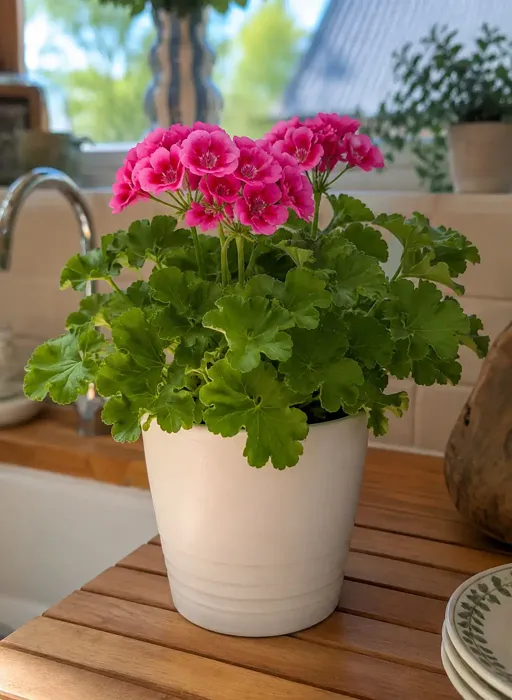
description

Zonal Geranium is a sunny container favourite with rounded leaves and colourful flower heads.
benefits
- Flowering
- Suitable for containers
warnings
- Toxic to cats
- Toxic to dogs
How to care for Zonal Geranium
sunlight
Native to sunny South African habitats, zonal geraniums are built for open, bright positions. Give them the sunniest spot you have to keep plants compact and flowering well.
Full sun

Aim for at least 6 hours of direct sun daily. Outdoors, a south- or west-facing position is ideal. Indoors, place it close to a bright south-facing window; less light leads to lanky growth and fewer flowers.
watering
Water thoroughly, then let the top 2-3 cm of compost dry before watering again. Zonal geraniums bloom best with steady moisture, but their roots quickly suffer in soggy soil.
Spring and summer


Check every few days and expect to water about every 3-7 days in active growth. Water slowly until it drains from the pot, then empty the saucer. Hot sun, wind, small pots, and hanging baskets dry much faster.
Autumn and winter
In cooler, lower-light conditions, water roughly every 1-2 weeks, only when the upper compost is dry and the pot feels noticeably lighter. Growth slows, so roots use less water.

humidity
Preferred humidity
Zonal geraniums descend from plants adapted to sunny, relatively dry parts of southern Africa, so average indoor air suits them well. Aim for moderate humidity with good airflow.
Usually acceptable
Air that stays very dry can cause crisp leaf edges, dry flower buds, or buds that drop, especially near heating. Check that the compost is not drying too quickly before blaming humidity.
- Keep the plant away from radiators and heating vents.
- Maintain space between plants so air can circulate.
- Avoid persistently humid, still conditions, which encourage fungal problems.
temperature
Preferred temperature
Winter minimum
Garden geraniums descend from sun-loving South African Pelargonium species, so they grow best in warm, bright conditions with good airflow. They can handle warmer weather if watered well, but growth slows in cool rooms and cold, wet compost can damage roots.
nutrition
March - August
Feed every 2 weeks with a balanced liquid fertiliser for flowering plants, diluted to about half the label strength. Apply to moist compost while the plant is actively growing and blooming. Stop feeding in autumn and winter unless it is still making strong new growth in bright, warm conditions.
Potassium
Potassium supports sturdy stems and continued flowering. A fertiliser made for flowering container plants usually provides enough without pushing leafy growth at the expense of blooms.
Nitrogen
Nitrogen keeps the rounded leaves green and supports new growth. Use it in moderation, as too much can produce lots of foliage with fewer flowers.
soil
Light, free-draining soil
Zonal geranium roots need air around them and dislike staying wet. Use a loose potting mix with compost or coir, plus perlite, pumice, or fine bark to improve drainage.
pH 5,8 - 6,5
This is slightly acidic to near-neutral, which helps the plant take up nutrients well. Most fresh all-purpose potting mixes suit it, especially those made for flowering container plants.