
Clivia / Bush Lily
Clivia miniata
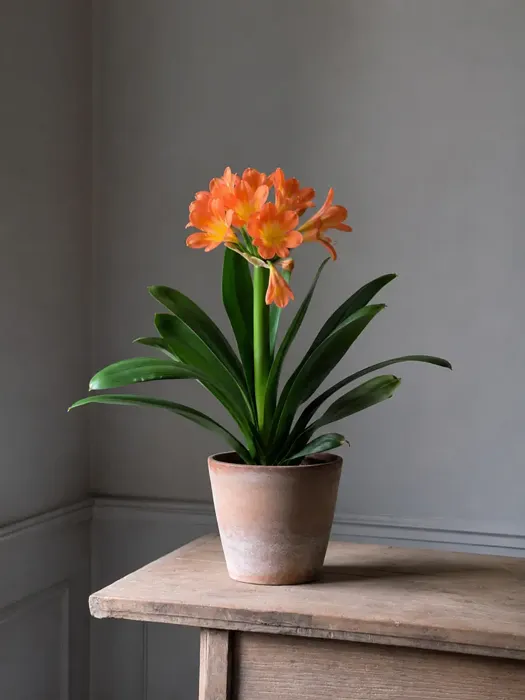
description

Clivia, or bush lily (Clivia miniata), is recognized by its dark green, strap-like leaves and rounded clusters of orange, trumpet-shaped flowers. The blooms rise on sturdy stems from the center of the leafy fan, often in late winter or spring. Native to the shady forests of South Africa, it grows from thick, fleshy roots rather than a true bulb and can live for many years in the same pot.
benefits
- Flowering
- Suitable for containers
warnings
- Toxic to cats
- Toxic to dogs
How to care for Clivia
sunlight
In South African woodland, clivia grows beneath a broken canopy rather than in open sun. Give it bright, filtered light indoors for healthy leaves and the best chance of flowers.
Bright indirect light


Place near an east-facing window, or a few feet back from a bright south or west window behind a sheer curtain. Gentle early sun is usually fine, but strong afternoon sun can scorch the strap-like leaves.
Lower light - tolerated
Clivia stays leafy in medium to low indirect light, but it may grow more slowly and flower less reliably. Move it brighter if flowering is the goal.
watering
Let the mix dry partly before watering. Clivia has fleshy roots that rot easily if they stay wet, so thorough watering followed by a short dry spell works best.
Active growth


In brighter, warmer months, water about every 7-10 days. Water until it drains freely, then wait until the top 1-2 inches of mix are dry and the pot feels lighter.
Cooler, low-light months
During its cooler resting period, water roughly every 2-4 weeks, only enough to keep the root ball from becoming bone dry. Growth slows, so the mix should dry further between drinks.

humidity
Humidity
Clivia grows beneath trees in South African woodland, so it appreciates moderate humidity. Average household air is usually fine at about 35-60%, with 40-60% preferred. If air stays very dry, especially near heating, leaf tips may turn brown and crisp.
- Move it away from radiators, heating vents, and hot sunny windows.
- Run a small humidifier nearby if humidity is regularly below 35%.
- Group it with other plants to create a slightly more humid pocket of air.
temperature
Active growth
Winter rest
Clivia comes from the shaded woodlands of South Africa, where temperatures stay fairly mild. Keep it comfortably warm while it grows, then give it a cool, frost-free rest in autumn and winter to encourage flowering.
nutrition
March - August
Feed every 3-4 weeks while the plant is making new leaves, using a balanced liquid houseplant fertilizer at about half strength. Apply it to already moist compost. Stop feeding in autumn and winter, when Clivia rests and prepares to flower.
Nitrogen
Nitrogen supports the long, deep-green strap leaves. A balanced feed provides enough - heavy feeding can encourage soft leafy growth at the expense of flowers.
Potassium
Potassium supports sturdy growth and flowering. A normal balanced fertilizer is sufficient; there is no need for a special bloom booster.
soil
Rich, airy, free-draining soil
Clivia likes some moisture around its fleshy roots, but stagnant compost can cause rot. Use a quality potting mix loosened with orchid bark, perlite, or pumice so water drains freely.
pH 6,0 - 6,5
This is slightly acidic, which suits clivia well. Most standard houseplant or peat-free potting mixes fall close to this range, so no special adjustment is usually needed.