
Purple Shamrock / False Shamrock
Oxalis triangularis
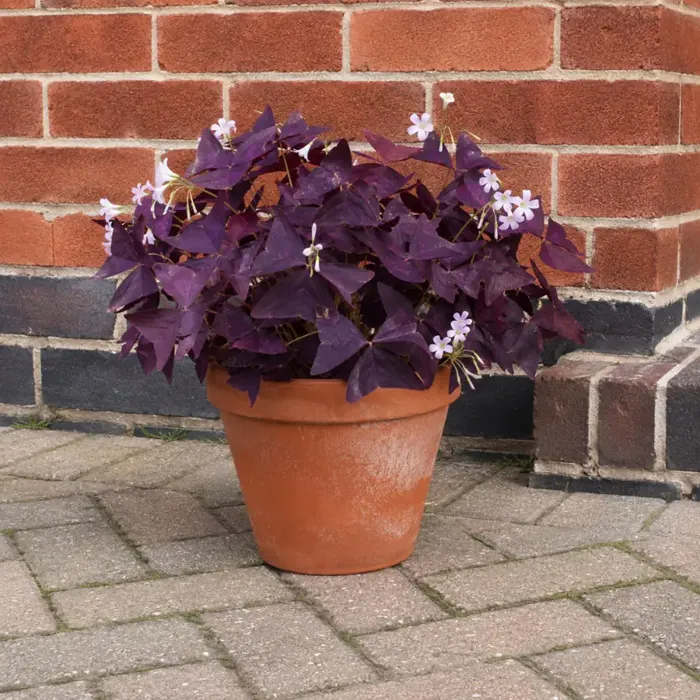
description

Purple Shamrock (Oxalis triangularis), also called False Shamrock, grows from small corms into a low clump of deep purple, three-part leaves shaped like butterflies. Delicate pale pink to white flowers rise above the foliage, adding a soft contrast to the dark leaves. Its leaflets fold together at night and reopen in daylight, a daily movement that makes this plant especially fun to watch.
benefits
- Flowering
- Suitable for containers
warnings
- Toxic to cats
- Toxic to dogs
How to care for Purple Shamrock
sunlight
In its South American woodland habitat, Purple Shamrock gets bright light softened by surrounding plants. At home, give it a bright spot out of harsh afternoon sun to keep the purple leaves richly colored.
Bright indirect light


Place near an east-facing window, or a little back from a south or west-facing window behind a sheer curtain. Too little light can make stems stretch and leaves less vividly purple.
Gentle morning sun
A few hours of mild early sun is usually welcome, especially in winter. Avoid strong midday or afternoon rays, which can bleach or scorch the foliage.
watering
Keep Purple Shamrock lightly moist while it is growing, but never let its bulbs sit in soggy soil. Water thoroughly, then let excess drain away.
Active growth


In bright, warm conditions, water about every 5-8 days. Check first: water when the top 1-2 cm of soil feels dry and the pot is noticeably lighter. It may need water less often in low light, cool rooms, or a large pot.
Low light or dormancy
When growth slows, water roughly every 2-3 weeks only after much of the pot has dried. If the foliage dies back and the plant rests, keep the soil almost dry and resume regular watering when new shoots appear.

humidity
Preferred humidity
Native to seasonally moist South American woodlands, Purple Shamrock appreciates moderate humidity but usually adapts well to ordinary indoor air. Aim for 40-60%; it can tolerate around 30% if watering and light are well managed.
Air that stays very dry can cause crisp brown leaf edges, limp growth, and shorter-lasting flowers, especially near heating or air conditioning.
- Group plants together to create a slightly gentler microclimate.
- Run a humidifier during dry winter heating and check levels with a hygrometer.
- Keep airflow gentle so leaves do not stay damp for long.
temperature
Preferred range
Winter minimum
Native to warm parts of South America, Purple Shamrock is happiest in steady room temperatures. Keep it away from frost and prolonged cold, which can trigger dormancy or damage the foliage. In hot rooms above 27°C (80°F), give it bright indirect light and let the soil dry a little more between waterings.
nutrition
September - April
Feed about once a month while your Purple Shamrock is making new leaves and flowers. Use a balanced liquid houseplant fertilizer at half strength on moist soil. Stop feeding when growth slows or the plant goes dormant, even if this happens outside the usual season.
Nitrogen
Nitrogen supports the fresh purple foliage. A balanced fertilizer provides enough without encouraging soft, overly leafy growth.
Potassium
Potassium supports steady growth and flowering, and is supplied by a regular balanced fertilizer.
soil
Light, moisture-retentive, well-draining soil
Purple Shamrock grows from small bulbs that need steady moisture but rot in dense, soggy compost. Use a loose houseplant mix with perlite or pumice, plus a little coco coir or compost to hold moisture without becoming heavy.
pH 6,0 - 7,0
This is slightly acidic to neutral, which most quality houseplant mixes already provide. Avoid strongly acidic mixes intended for ericaceous plants, and refresh compacted soil when repotting.