
Silver Squill / Wood Hyacinth / Scilla socialis
Ledebouria socialis
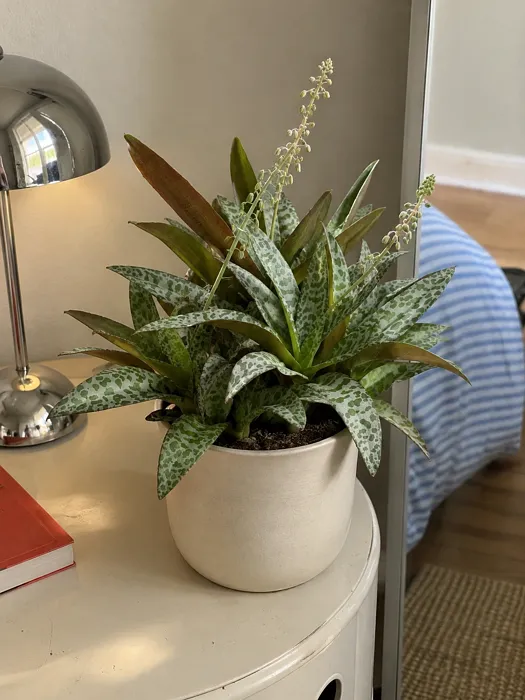
description

Silver Squill (Ledebouria socialis) is a small bulb plant with silvery green leaves patterned in dark spots and purple undersides. Its bulbs often sit partly above the soil, forming tidy clumps that give the plant a slightly quirky look. Native to South Africa, it stores water in its bulbs and thick leaves, which helps it cope with dry spells. Mature plants readily produce offsets, so a single pot can slowly become a crowded little colony.
benefits
- Low—water tolerant
- Beginner-friendly. Easy care
- Сan handle lower humidity level
- Flowering
- Drought-tolerant — forgives missed waterings
- Low maintenance
- Suitable for containers
warnings
- Toxic to cats
- Toxic to dogs
How to care for Silver Squill
sunlight
Silver squill comes from seasonally dry South African habitats, where it gets bright light and some sun between shrubs or in open ground. Give it a bright windowsill rather than a dim corner.
Bright indirect light


Place near an east or west window, or a little back from a bright south-facing window. This keeps the leaves compact and their silver pattern clear.
Gentle direct sun
A few hours of morning sun is usually welcome, especially in winter. Acclimate it gradually, and soften intense afternoon sun if leaves bleach or develop dry brown patches.
watering
Let the potting mix dry well between waterings. Silver Squill stores water in its bulbs, so it is far safer slightly dry than kept consistently damp.
Active growth - spring to early autumn


Water thoroughly about every 1-2 weeks, only when the top half of the mix is dry and the pot feels noticeably light. Empty the saucer after draining.
Cooler or low-light months
Slow down to roughly every 3-4 weeks. Check that the mix is dry nearly all the way through before watering, especially if growth has paused.
These are starting points, not a fixed schedule. Bright light, warmth, a small terracotta pot, and a gritty mix dry faster; low light, cool rooms, a large pot, and dense soil stay wet longer.

humidity
Typical home humidity
Silver squill comes from seasonally dry parts of southern Africa, so it is comfortable in average indoor air. It does not need a humidifier and is happiest with good airflow.
Preferred range
Very dry heated air can cause brown, crisp leaf tips or edges and may encourage spider mites. If humidity stays below about 30%, move it away from heating vents and check the leaves regularly.
- Group plants nearby or use a small humidifier if your home is persistently very dry.
- Avoid misting as a routine. Water caught around the bulb and leaves can linger, especially in cool conditions.
temperature
Preferred range
Winter minimum
Native to South Africa, Silver Squill is happiest in ordinary warm indoor conditions. It handles summer warmth well with airflow, but cool conditions slow growth and keep the pot wet for longer.
nutrition
March - August
Feed about once a month while Silver Squill is making new leaves or offsets. Use a balanced liquid houseplant fertilizer at half the label strength, applied to moist soil. Stop feeding when growth slows in autumn and winter.
Nitrogen
Nitrogen supports the patterned leaves. A gentle, balanced feed is enough, as too much can cause soft, weak growth.
Potassium
Potassium supports sturdy growth and the plant's water-storing bulbs. A general balanced fertilizer provides what it needs.
soil
Light, gritty, fast-draining soil
Silver Squill stores water in its bulbs, so its roots need air around them and should not stay wet. Use a cactus-style mix, or lighten regular potting soil with plenty of perlite, pumice, or coarse grit.
pH 6,0 - 7,0
This is slightly acidic to neutral, a range most houseplant and cactus mixes naturally provide. Choose a fresh, free-draining mix rather than trying to adjust pH at home.