
Tulip / Garden Tulip
Tulipa gesneriana
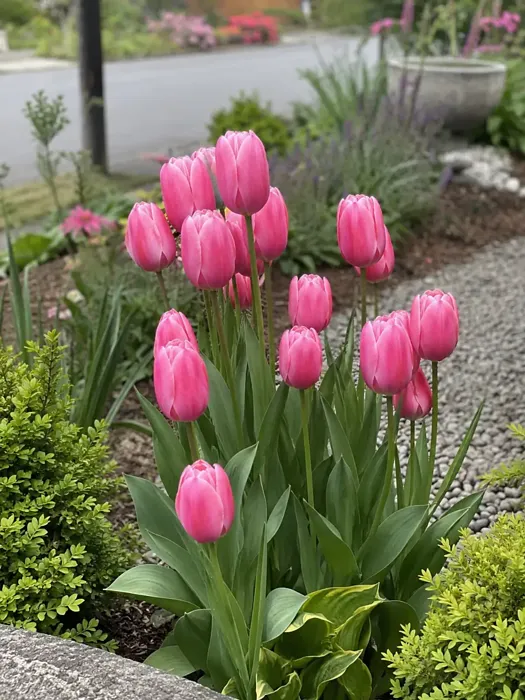
description

Tulip (Tulipa gesneriana), also called Garden Tulip, grows from a bulb into upright stems with smooth blue-green leaves and cup-, bowl-, or lily-shaped flowers. Its blooms come in nearly every colour except true blue, often with stripes, fringed edges, or contrasting markings. Though strongly associated with the Netherlands, tulips trace much of their garden history to Central Asia and the Ottoman Empire before becoming a Dutch icon.
benefits
- Flowering
- Suitable for containers
warnings
- Toxic to cats
- Toxic to dogs
How to care for Tulip
sunlight
Tulips come from open, sunny spring landscapes, so they flower best with plenty of direct light. Give potted bulbs the brightest spot you have while keeping them cool.
Full sun

Outdoors, plant where they receive at least 6 hours of sun. Indoors, place flowering pots at a south- or west-facing window, or under a grow light for about 12-14 hours daily. Low light causes soft, leaning stems and shorter-lived blooms.
watering
Water deeply, then let the top few centimetres of soil dry before watering again. Tulip bulbs rot in constantly wet soil, especially before they have active roots.
Autumn planting and winter


Water well when planting. In pots, check about every 1-2 weeks and water if the top 2-3 cm is dry. Garden bulbs usually need no extra water unless the weather stays dry for several weeks.
Spring growth and flowering
Keep soil lightly and evenly moist while leaves are growing. Container tulips may need water about every 3-5 days; in the ground, water roughly every 7-10 days during dry weather. Check the soil first: brighter, warmer spots and small terracotta pots dry faster.
After flowering
Water only if the soil becomes very dry while the leaves are still green. Once foliage has yellowed and died back, stop routine watering and keep dormant bulbs relatively dry.

humidity
Preferred humidity
Garden tulips suit ordinary household humidity. They are adapted to cool, open spring conditions, not tropical air, so keep potted bulbs in a cool, well-ventilated spot.
Acceptable range
Air below about 35% can make petals or leaf edges turn crisp and brown, especially near radiators. Warm, dry rooms also shorten the flowering period.
- If indoor air is very dry, run a humidifier nearby rather than misting the flowers.
- Provide gentle airflow and avoid constantly damp foliage, which can encourage mould.
temperature
Active growth
Chilling period
Garden tulips come from regions with cold winters and cool springs. Keep potted tulips cool and bright while they grow and flower, as warm rooms make stems stretch and blooms fade faster. Most garden varieties need about 12-16 weeks at 2-9°C (36-48°F) before flowering.
nutrition
February - May
Feed while leaves are actively growing, starting when shoots emerge. For pots, use a balanced bulb fertilizer or one slightly lower in nitrogen at about half strength every 2-3 weeks. In garden soil, one light application as growth starts is usually enough. Stop feeding once the foliage yellows and bulbs enter dormancy.
Phosphorus
Phosphorus supports strong roots and helps bulbs store energy for next year's flowers. A bulb fertilizer provides enough without needing an extra product.
Potassium
Potassium helps keep the leaves working well after flowering, so the bulb can replenish itself before dormancy.
soil
Loose, free-draining soil
Tulip bulbs need airy soil that drains quickly, especially during winter, so they do not rot. Use a fertile garden loam or potting mix loosened with coarse sand, grit, or perlite. Avoid heavy, water-holding soil around the bulbs.
pH 6,0 - 7,0
This is slightly acidic to neutral, a range that suits most garden soils and multipurpose mixes. If your soil is very clay-heavy or strongly acidic, improve drainage with grit and mix in compost rather than trying to adjust pH aggressively.